
TRADITIONS · SOUTH FLORIDA
The paseo, the blessing of the coins, the money dance and the crazy hour. A photographer’s guide to the Cuban wedding day in Miami.
Claim your complimentary session
A tradition Miami never lost
Cuban wedding custom sits at the center of Miami wedding culture in a way it does almost nowhere else. Nearly seventy years of migration mean that here, Cuban traditions are not a heritage garnish added to an American wedding.
They are frequently the default, and other communities have borrowed from them freely.
What follows is the common shape. Families vary, and the diaspora has evolved its own versions across three generations in South Florida. Your abuela outranks this page.
The ceremony
Los padrinos
The godparents hold a formal role rather than an honorary one. They may purchase the rings, present them at the altar, and stand with the couple throughout. Choosing padrinos is a decision about family standing as much as friendship, and it is made early.
The blessing of the coins
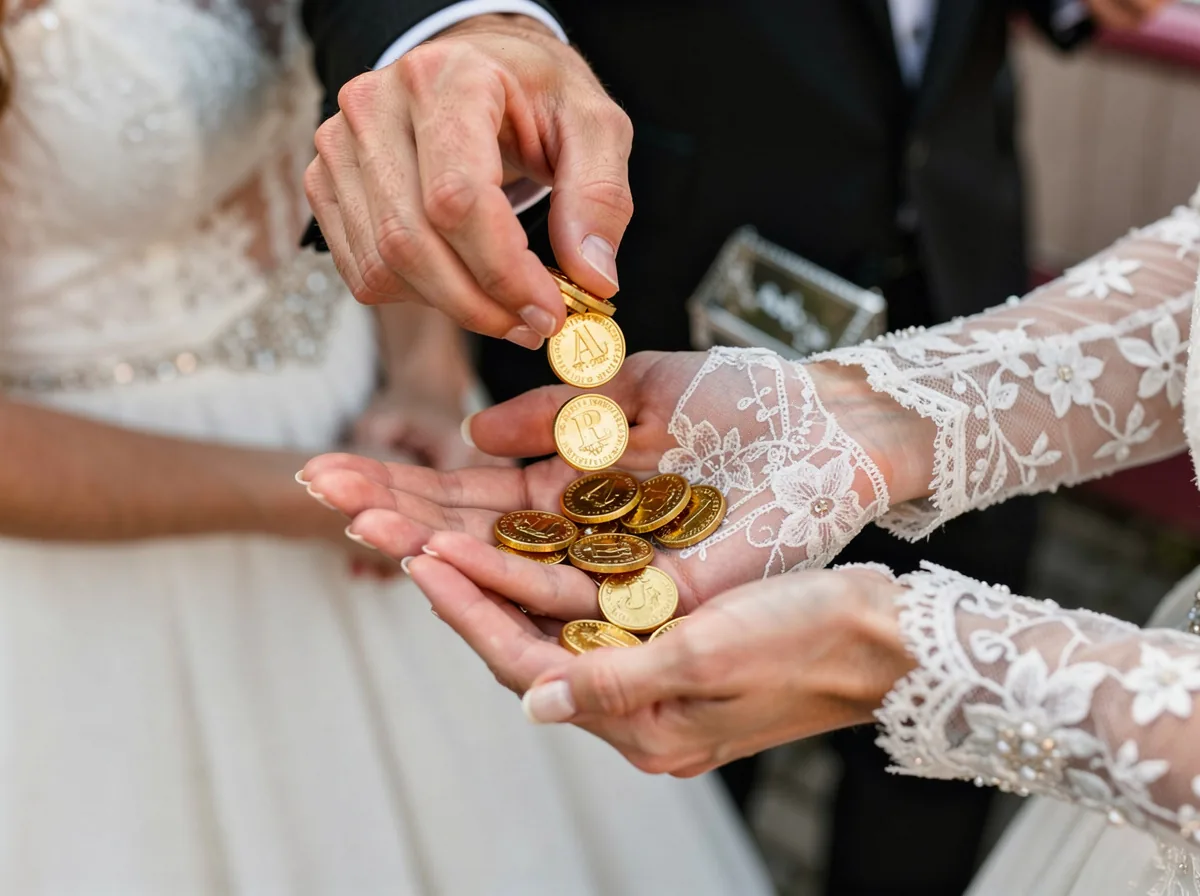
After the vows, the coins are blessed. The custom shares its root with las arras across the Spanish-speaking world: thirteen coins representing the couple’s shared material future and the promise to provide for one another. In Cuban practice the padrinos are usually central to the moment.
Rice, flowers, and out into the street
Guests throw rice or flowers as the couple leave, for prosperity. Then comes the part that makes a Cuban wedding photograph unlike any other.
El paseo
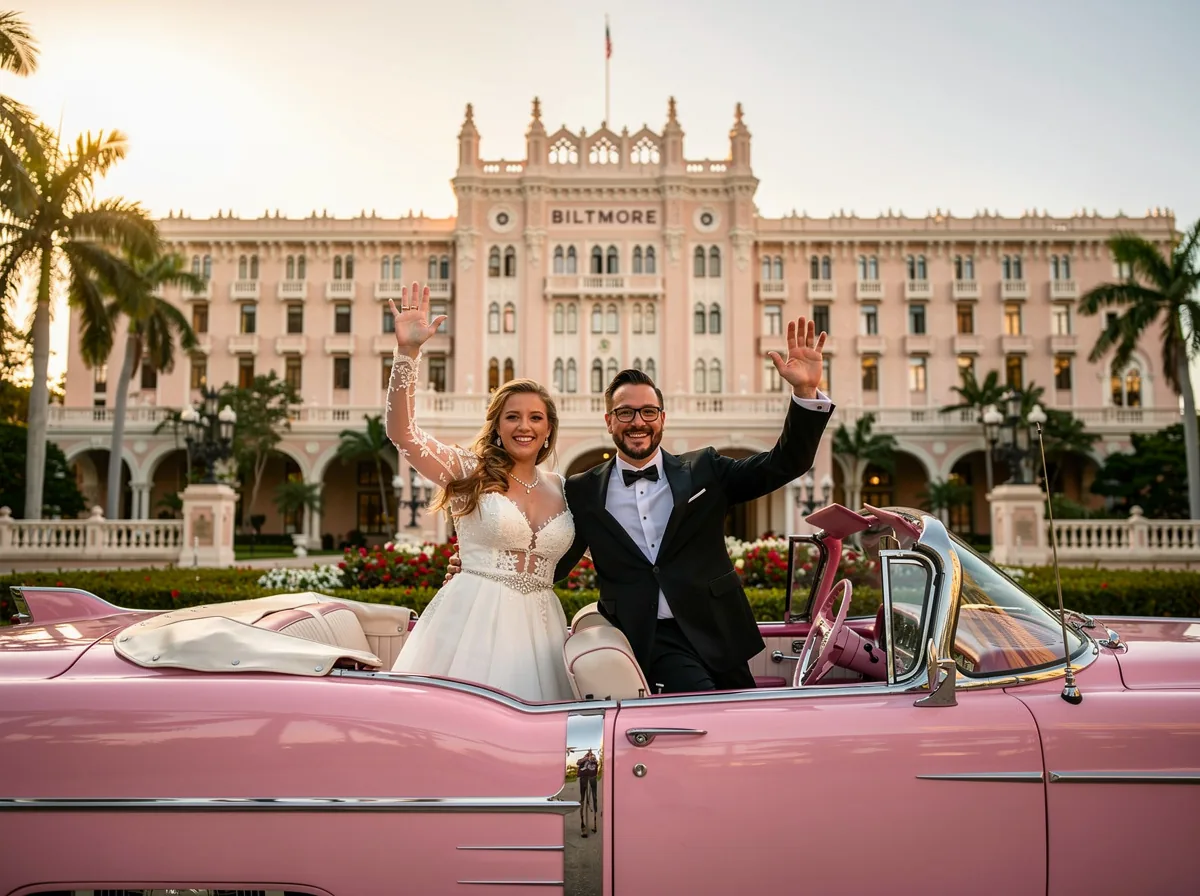
Traditionally the couple lead a parade from the church to the reception. Music, dancing, and classic American cars, which in Havana were a necessity and in Miami became a statement. The paseo is loud, it is public, and it turns strangers on the pavement into part of the wedding.
Not every Miami couple does the full paseo, but the classic-car exit survives almost universally, and it deserves planning rather than improvisation.
The reception
El baile del billete
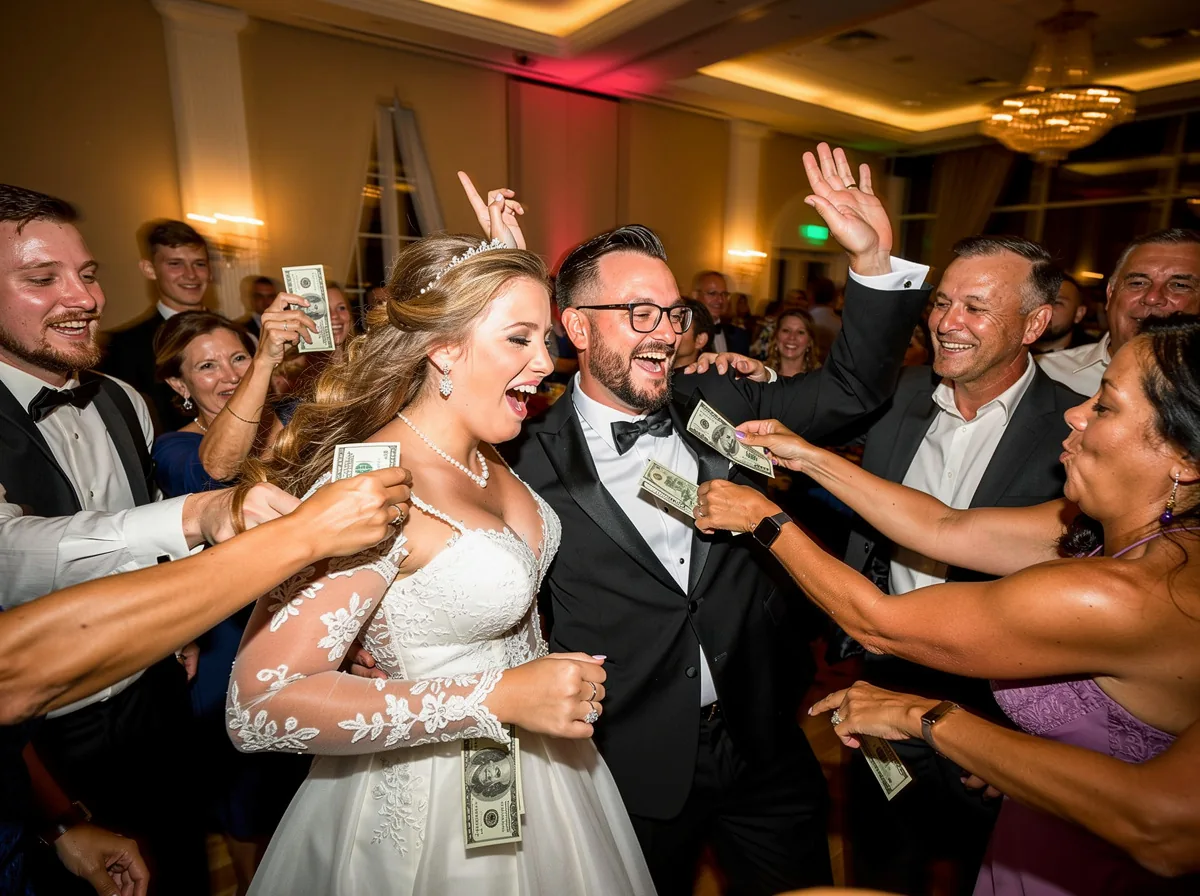
The money dance. Guests queue to dance briefly with the bride or groom, pinning bills to their clothing. It is practical, public, and lasts far longer than people expect because everyone wants a turn.
The conga
A conga line through the room is standard rather than optional, and it does not stay in one place. It leaves the dance floor, goes through the tables, and sometimes leaves the building.
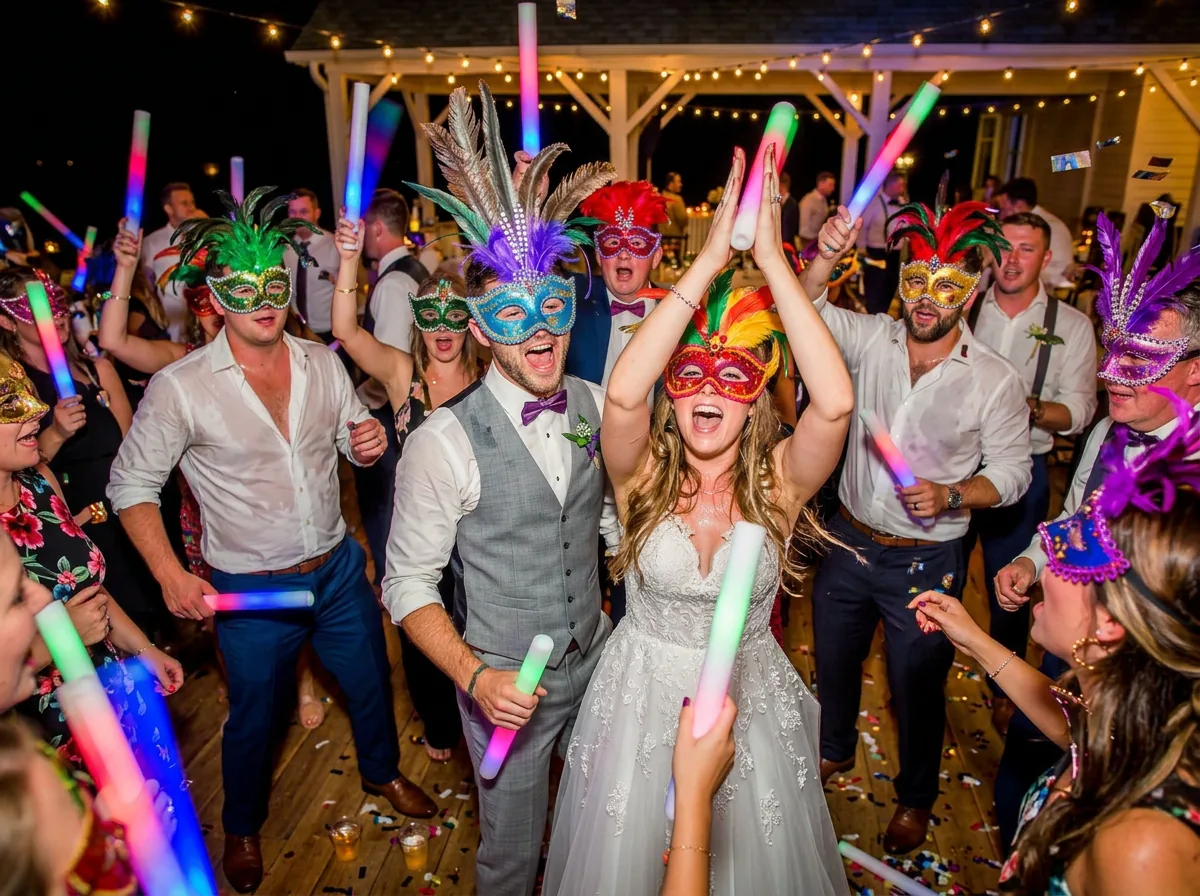
La hora loca
What it is, when to schedule it, and what it costs.
The food
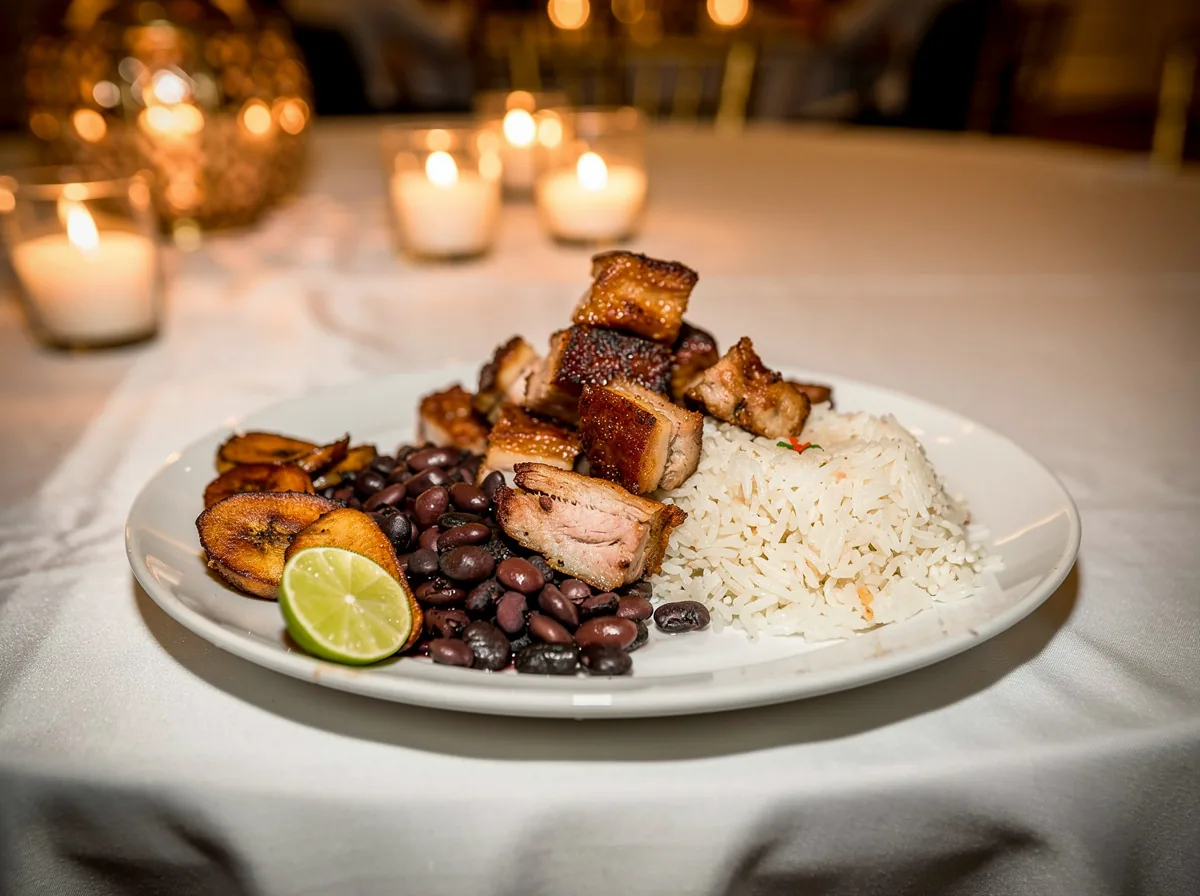
Masitas de puerco, arroz con frijoles negros, maduros, yuca frita. Served generously and usually late. Salsa and rumba carry the floor, live where the budget allows.
What this means for your photographer
The money dance is a coverage decision
El baile del billete can run twenty minutes and is repetitive by design. Shooting all of it produces a hundred near-identical frames. The photographs worth having are the first few, the funniest few, and one wide frame showing the queue. Then move on and cover the room.
Pinned money ends the portraits
Once the dress is covered in bills, formal portraits are effectively over. Any remaining couple portraits must happen before the money dance, not after.
This is the most common sequencing mistake at Cuban weddings.
The paseo needs a plan and a second body
A moving parade with classic cars cannot be covered from one position. It wants a wide lens close in for energy and a long lens from ahead for compression, which means either a second shooter or agreeing the route in advance so one photographer can leapfrog it.
Midnight hora loca means booking past midnight
If the crazy hour starts at 12:30am and your package ends at midnight, you have paid for a wedding and bought photographs of the part before the best part.
Check the timeline against the contract, and see what coverage actually costs in Miami.
Classic cars are a lighting problem
Chrome and gloss paint reflect everything including your flash and yourself.
Shoot them in open shade or after sunset with light placed well off-axis.
Common questions
What is el baile del billete?
The money dance. Guests take a short turn with the bride or groom and pin money to their clothing, contributing to the couple’s future while offering a blessing in person.
What is the paseo?
A parade from the ceremony to the reception led by the couple, with music, dancing and classic cars.
What food is served at a Cuban wedding?
Typically masitas de puerco, rice with black beans, sweet plantains and yuca fritters, served generously and often late.
When does la hora loca happen?
At Cuban weddings it commonly falls around midnight or later, later than at many other Latin weddings.
Do the padrinos buy the rings?
Often yes. The godparents may purchase the rings and present them at the altar.
Photographing these weddings in South Florida
I am Woody Henry, an editorial wedding photographer working across Miami-Dade, Broward and Palm Beach. Knowing the order of a day, and which moments happen only once, is most of the job.
A limited number of bridal sessions are complimentary for 2026: ninety minutes, twenty high-resolution edits, delivered within fourteen days. Full rates are on the pricing page.
CONTINUE READING
More From The Journal
La Hora Loca
What it is, when to schedule it, and what it costs.
Dominican Wedding Traditions
The arras tray, the blessed lasso, and merengue until sunrise.
Puerto Rican Wedding Traditions
Capias, the bridal doll, padrinos and the lazo.
More traditions
Haitian · La Hora Loca · Cuban · Colombian · Puerto Rican · Dominican · Venezuelan · Mexican · Brazilian
Join the 2026 Editorial Series
I am photographing a limited number of brides across Miami-Dade, Broward and Palm Beach. Selected brides receive a ninety-minute session and twenty high-resolution edits at no cost, delivered within fourteen days.
One session a day, weekends only. Every booking is confirmed personally, normally within 48 hours.