
TRADITIONS · SOUTH FLORIDA
A guide to the ceremony, the reception, the food and the customs, written by a Haitian photographer working in South Florida. Including what each tradition means for the person holding the camera.
Claim your complimentary session
Where these traditions come from
Haitian wedding custom sits on three foundations at once: West African inheritance, French colonial form, and Caribbean life. That combination is why a Haitian wedding can feel formal and unrestrained in the same afternoon. The church hour is solemn and European in shape. What follows it is neither.
I am Woody Henry. I am Haitian, I photograph weddings across South Florida, and this page exists because most of what is written about Haitian weddings online is written by people who have never been to one.
One caveat before anything else: Haiti has ten departments and a diaspora spread across Miami, New York, Boston and Montreal, and custom varies by family, by region and by generation. Treat what follows as the common shape, not a rulebook. Your grandmother is the authority, not this page.
Before the wedding
Gatherings rather than a rehearsal dinner
A formal rehearsal dinner is uncommon. What happens instead is a gathering of family and close friends built around prayer, blessing and a shared meal. It is less choreographed than a rehearsal dinner and considerably warmer, and for a photographer it is often the most emotionally honest hour of the entire weekend.
Word of mouth invitations
Printed invitations exist, but the tradition is personal invitation, delivered by the couple and their families by word of mouth. One practical consequence: guest counts move. Plan for more people than the list says.
The groom’s family traditionally pays
Both families meet to plan, but tradition holds that the groom and his family cover the wedding, historically as a demonstration that he can provide.
Whether the bride’s family contributes varies widely, and in the diaspora this is one of the customs shifting fastest.
Attire
The dress
Most Haitian brides wear white, in Western silhouettes. What distinguishes the dress is often embroidery: brides who choose it tend to select Haitian motifs that carry meaning for them or their family. If your gown has embroidery, tell your photographer before the day. It deserves its own frames, shot in raking light so the thread reads as texture rather than flattening into the fabric.
What guests wear
Bright color, worn elegantly. This is not a wedding where guests are trying to disappear. It is one of the genuine visual pleasures of photographing Haitian weddings and it changes how a photographer works, which I come to below.
The ceremony
Church, and length
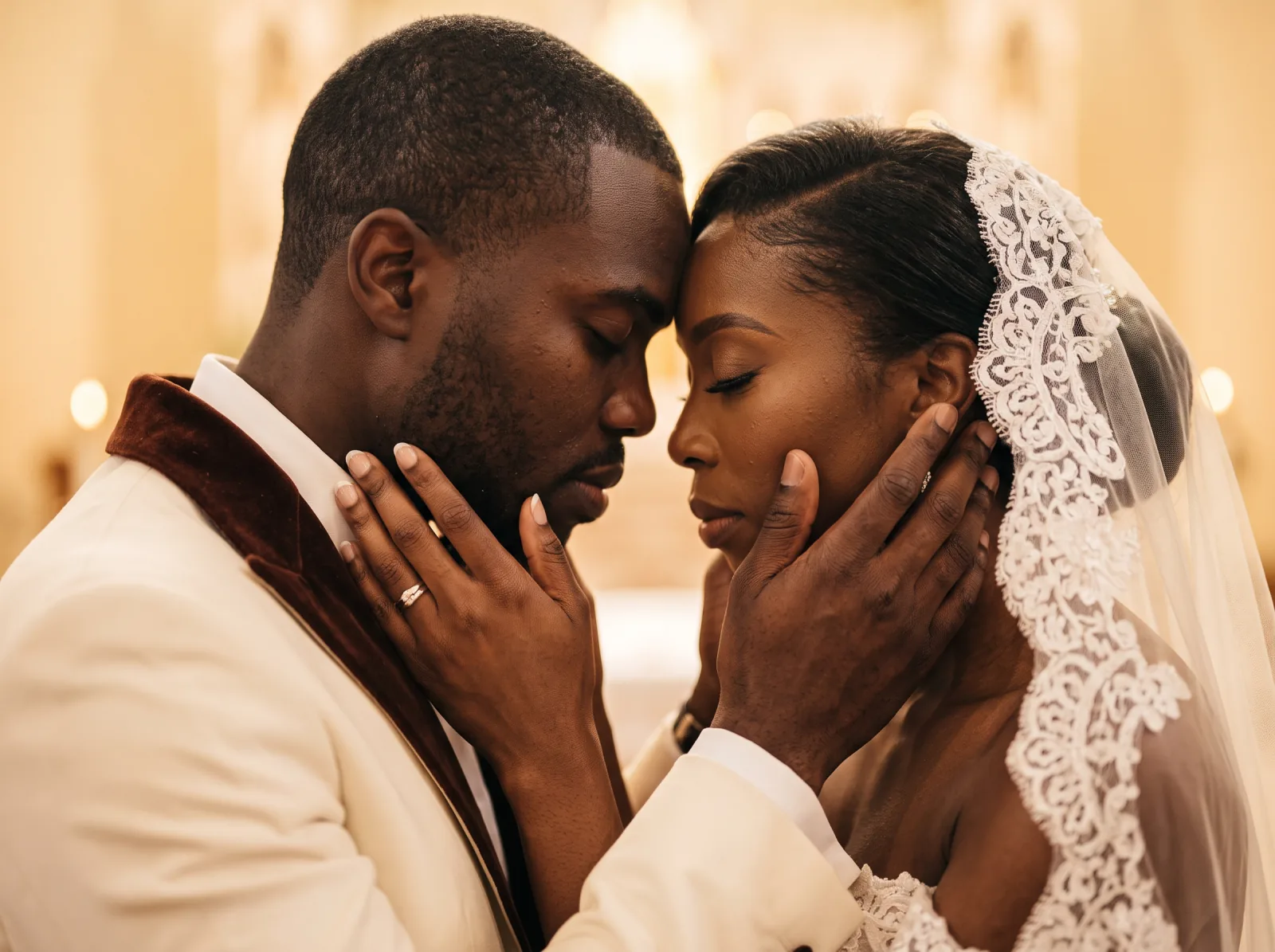
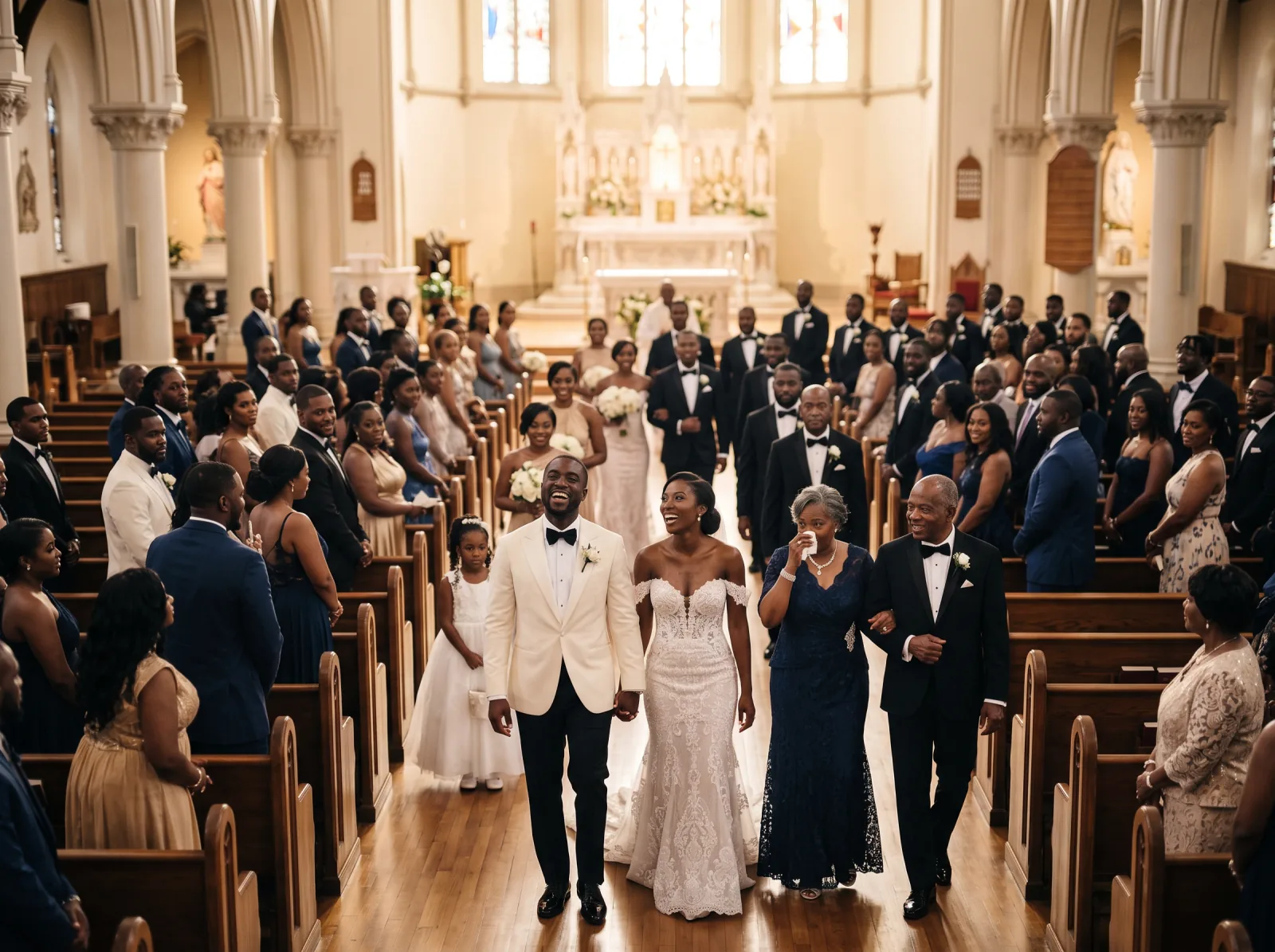
Most Haitian weddings are Christian church ceremonies running between one and three hours, with hymns, scripture readings and a full sermon. Some include more than one church choir.
Three hours is not a long ceremony by accident. The service is the point, not a formality to move through before the party. Any vendor who treats it as an obstacle to the reception has misunderstood the day.
Starting late
Ceremonies commonly begin well after the printed time. This is so widely understood that planning around it is simply competence rather than complaint. Build the buffer into the timeline, and if you want portraits in good light, protect that window explicitly rather than assuming it will survive.
Dancing down the aisle
Some couples have the wedding party process in with a three-step dance to Haitian music rather than walking. It is joyful, it is fast, and it is over quickly.
The reception
It lasts
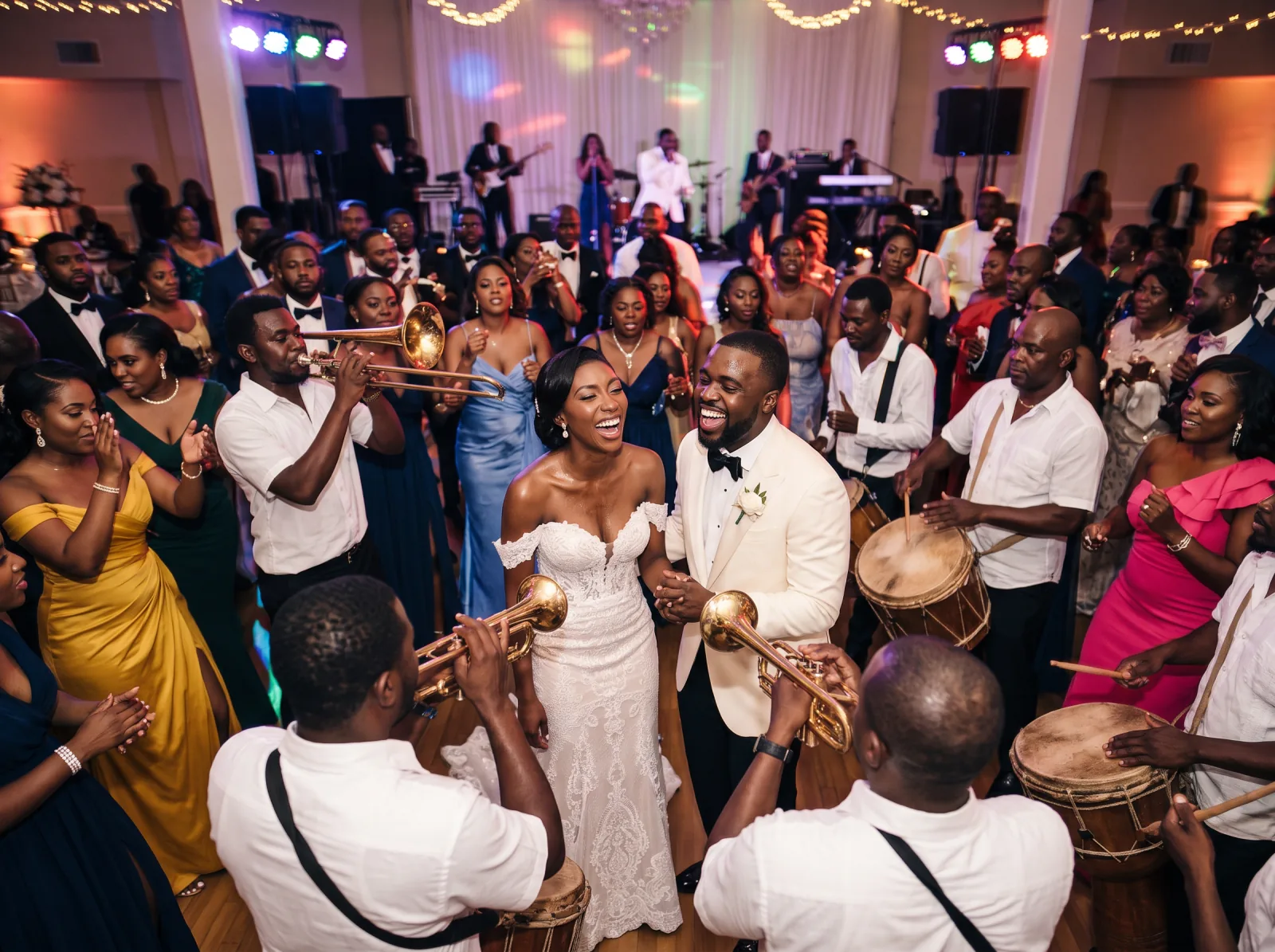
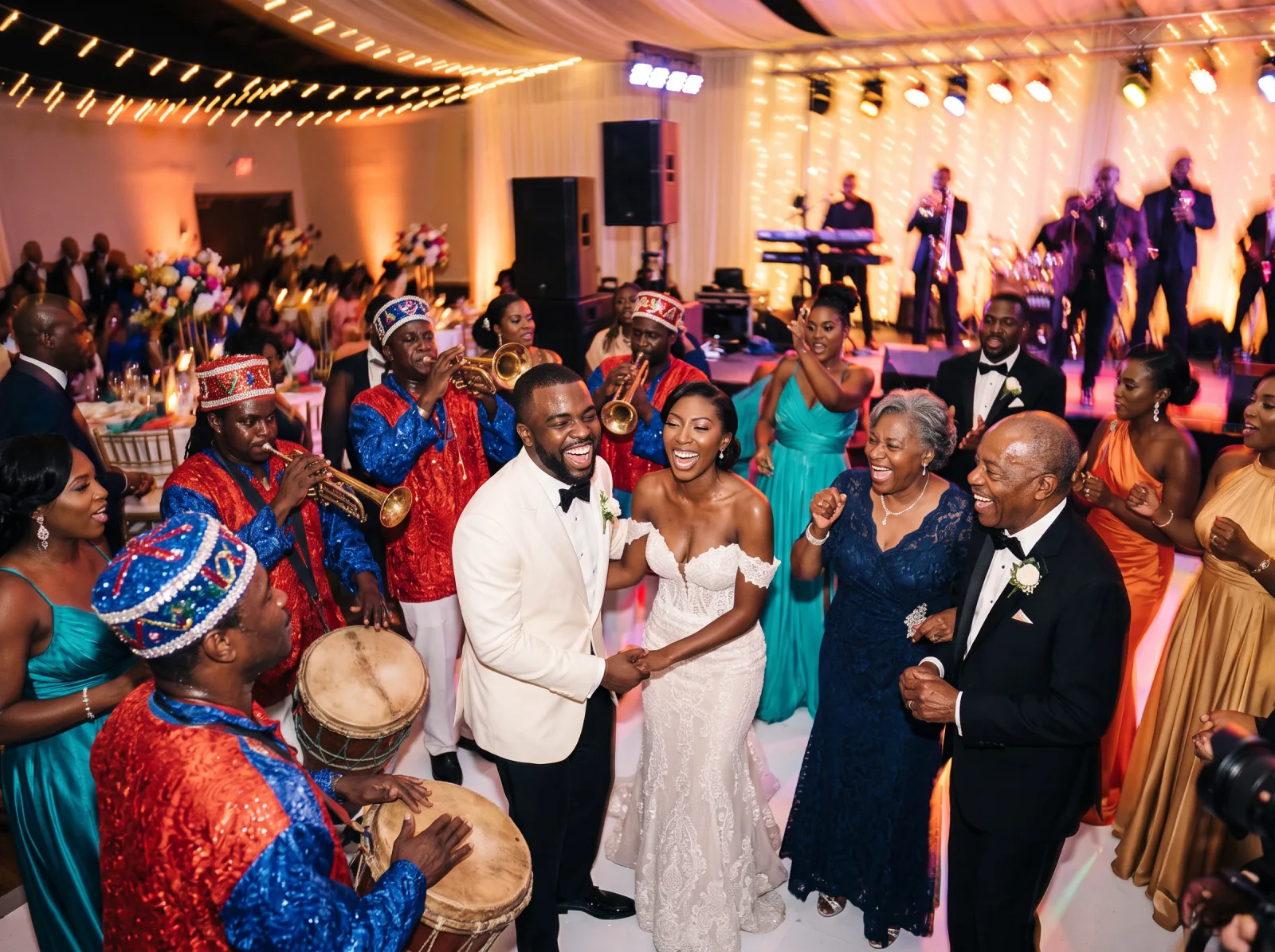
Haitian receptions run all night, and sometimes into the following day. Kompa and Zouk carry the floor, often with a live band, sometimes a Rara band with horns and percussion moving through the room.
Food, served throughout
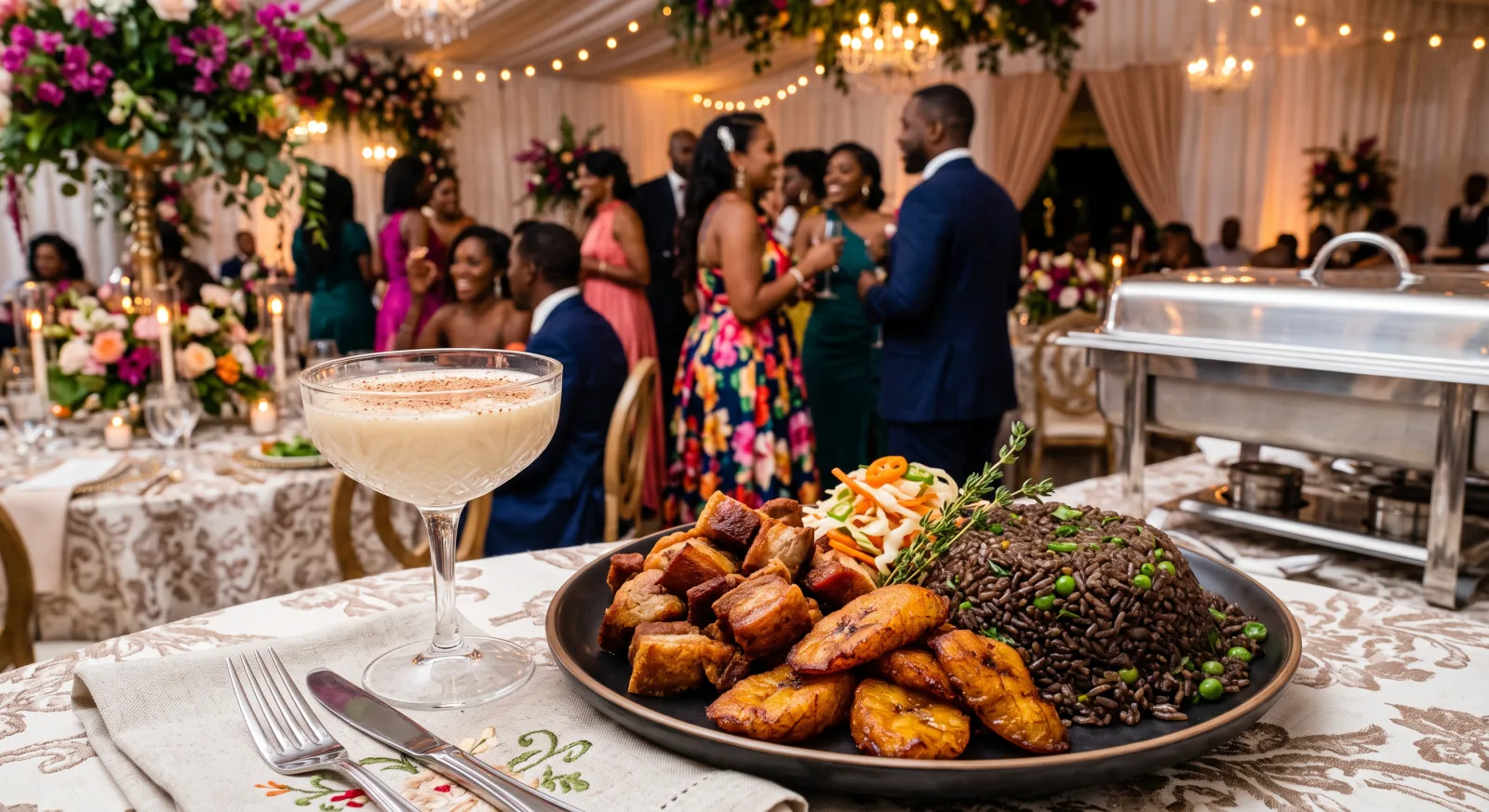
Black rice, griot, fried plantains and seafood, usually buffet-style and replenished across the night rather than served as a single seated dinner.
Kremas, the thick rum and coconut cream drink spiced with nutmeg and cinnamon, tends to appear more than once.
Gifts, not money
Cash gifts are traditionally frowned upon. Physical gifts that help the couple set up their life together are the expected form.
The cake goes home whole
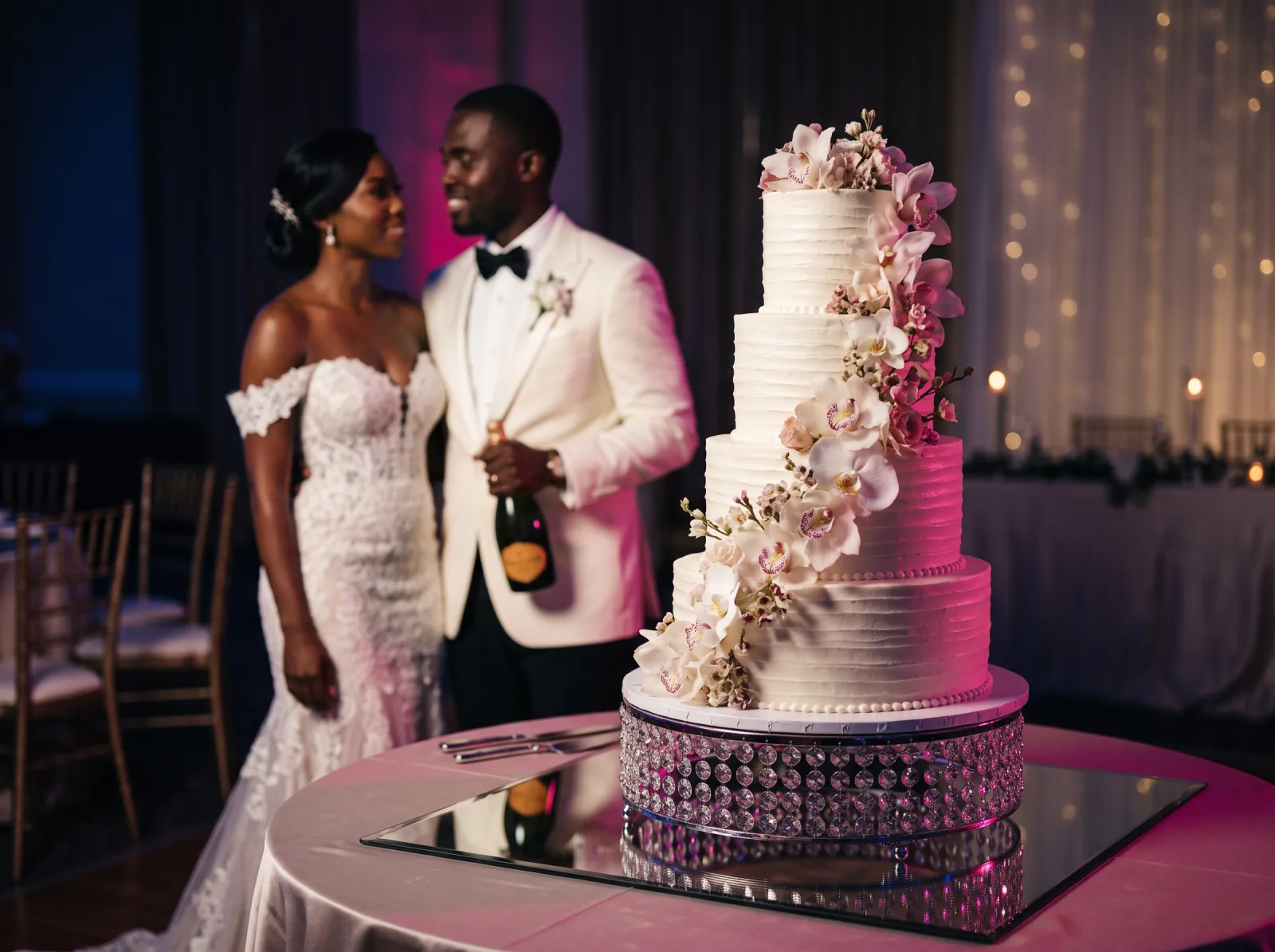
This is the tradition most often missed by vendors who have not worked a Haitian wedding. In many families the cake is not cut and served at the reception at all. It is sent to the couple’s home intact, and they eat it over the following days. Haitian vanilla cake appears on the dessert table late in the night, but the ceremonial cutting many photographers are trained to expect may simply never happen.
What this means for your photographer
This is the part no other guide covers, and it is the reason couples end up with photographs that miss the day.
Do not plan a cake-cutting shot
If the cake goes home whole, a photographer waiting for the cutting will stand there through the best dancing of the night waiting for something that is not coming. Ask the family directly during planning. If there is no cutting, that time belongs on the floor.
Churches are dark, and often restrict flash
A three-hour service in a church interior is a genuinely demanding lighting situation, and many churches limit or forbid flash and restrict where a photographer may stand. This is solved by asking the pastor beforehand, working with fast lenses at high ISO, and using a long lens from the back rather than moving around the aisle. A photographer who has not asked will either disrupt the service or come away with nothing usable.
Bright guest attire changes your exposure
A congregation in saturated color under mixed tungsten and daylight is a white-balance problem and a color-management problem at once. Skin tones across a wide range of complexions, in a room of strong color, is the single hardest technical part of the day. It is also why generic auto-corrected editing looks so wrong on these weddings, and why I grade Haitian weddings by hand.
The late start eats your portrait light
If the ceremony runs ninety minutes behind and the reception is called immediately after, golden hour is gone. The fix is agreed in advance: either a first look before the church, or a firmly protected fifteen minutes pulled out of the reception at sunset. Fifteen minutes is enough. Zero is not.
Kompa is fast
Kompa and Zouk dancing does not sit still, and a Rara band moves through the room rather than staying on a stage. Slow shutter drags will turn the whole night to mush. This is a fast-glass, high-ISO, anticipate-the-beat situation.
Photograph the elders
The people who will matter most in this gallery in twenty years are the grandparents, the aunties, the family who traveled. In a culture where the wedding is a family event rather than a couple’s event, a gallery that is 90% the couple has missed what happened.
The days after are part of it
Family visit the newlyweds in the days following, often bringing more gifts.
Almost nobody photographs this. It is available, it is quiet, and it is frequently more moving than the reception.
Questions people ask
How long is a Haitian wedding ceremony?
Typically one to three hours. The service includes hymns, scripture readings and a full sermon, and sometimes multiple choirs.
What is served at a Haitian wedding?
Black rice, griot, fried plantains and seafood are the staples, usually buffet-style and replenished through the night. Kremas is the traditional drink. Haitian vanilla cake appears on the dessert table late.
Is the cake cut at the reception?
Often not. In many families the cake is sent home whole and eaten over the following days.
What should I wear to a Haitian wedding?
Bright color, worn elegantly. Guests are expected to look celebratory rather than muted.
Should I give money as a wedding gift?
Traditionally no. A physical gift that helps the couple establish their home is the expected form.
What music is played?
Kompa and Zouk, frequently with a live band, sometimes a Rara band.
Ceremony music is religious.
Do I need a photographer who knows these traditions?
It helps considerably. The cake custom alone catches out photographers who have not worked a Haitian wedding, and church flash restrictions and mixed- light color work are learned rather than guessed.
Photographing Haitian weddings in South Florida
I photograph across Miami-Dade, Broward and Palm Beach, where one of the largest Haitian communities outside Haiti lives. If you want someone behind the camera who knows why the cake is still whole at midnight, I am available.
A limited number of bridal portrait sessions are complimentary for the 2026 season: ninety minutes, twenty high-resolution edits, delivered in fourteen days.
CONTINUE READING
More From The Journal
La Hora Loca
What it is, when to schedule it, and what it costs.
Dominican Wedding Traditions
The arras tray, the blessed lasso, and merengue until sunrise.
Cuban Wedding Traditions
The paseo, the blessing of the coins, and the money dance.
More
Miami Wedding Photographer · Bridal Portraits · Editorial Photography · Fort Lauderdale
Join the 2026 Editorial Series
I am photographing a limited number of brides across Miami-Dade, Broward and Palm Beach. Selected brides receive a ninety-minute session and twenty high-resolution edits at no cost, delivered within fourteen days.
One session a day, weekends only. Every booking is confirmed personally, normally within 48 hours.